An Ode to Bariloche
Story and Photos by Alex R Purdue.
Edited by Jack Sloan.
Buenos Aires is, without doubt, a city of emotion. It houses melancholic, nostalgic tango and the twisting magic of Borges’ stories. It pleads you to stay out until 5am in the morning, with no choice but to spill your life story to friends, or often strangers. Sometimes, it is a city so emotional and immense, that it can feel like walking home alone, bag clutched to your side, with the heavy taste of fernet and coke on the back of your tongue– becoming bitter. Emotions or experiences like these can transform a city so vast into something claustrophobic.
These feelings, however, were relinquished the second I stepped onto the tarmac at the sole airport in Bariloche, the famous mountain town in the “foothills” of the Patagonian Andes.
I remember how, that night, a cold and fresh wind languidly twisted through the crystal air and slid over my face. I breathed Bariloche in. A light drizzle came down as my friends and I waited for a cab to take us to our booking, somehow washing away any bleariness from the flight. I could barely sleep that night, buzzing differently than I had in Buenos Aires. Not with anxiety but with anticipation.
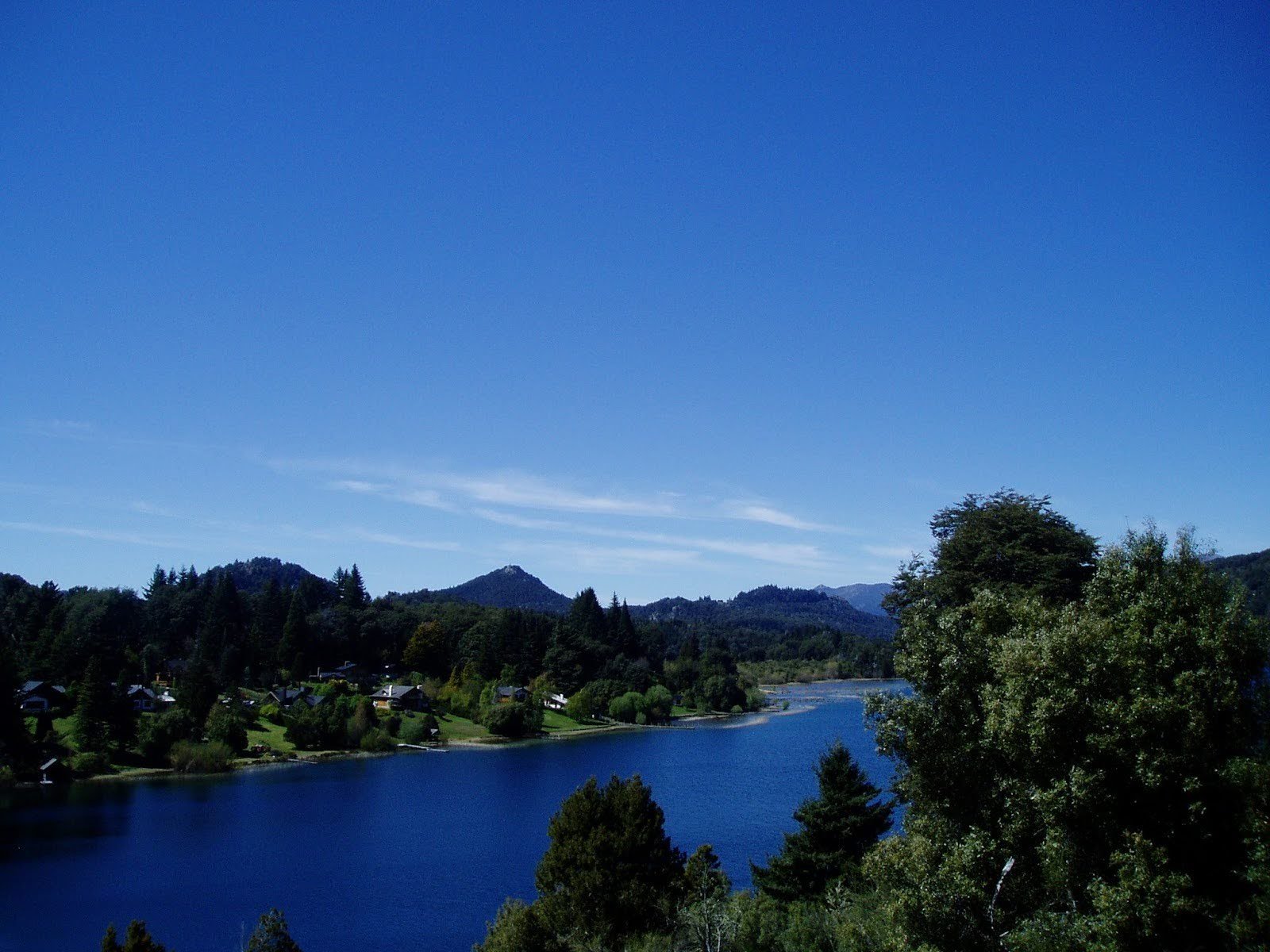
The next day, our first stop was to one of the types of places for which Bariloche is known - a lakeside tea house called Ceylon. There, we downed not ceylon tea but several porcelain pots of warm, milky chai, with crispy avocado toast and a berry-topped cheesecake that left us humming with satisfaction. The view of the lake and the mountains was wonderful enough to have us rising mid-meal to take perfectly-lit photos.
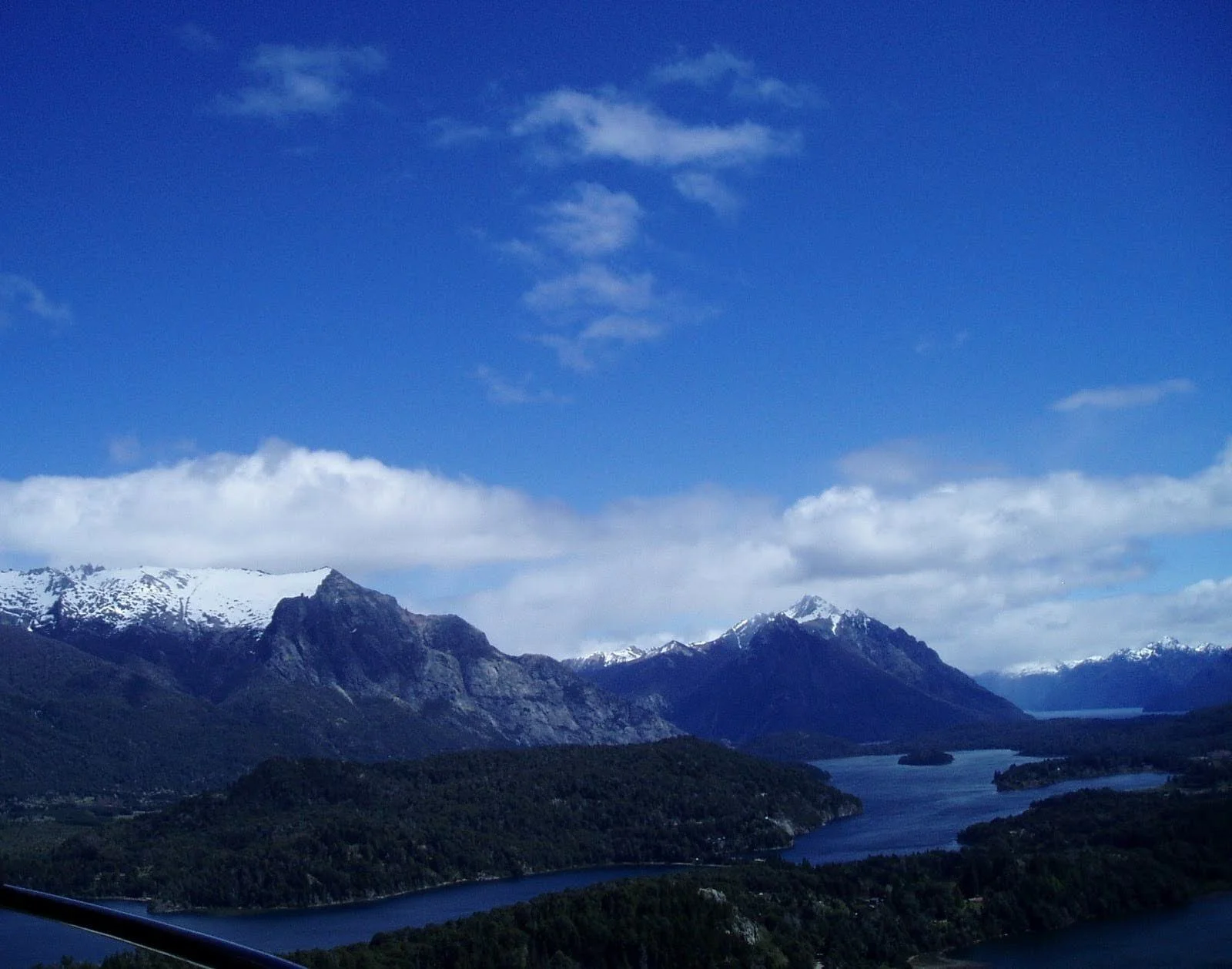
However, we would come to find that Ceylon’s view was nothing compared to the sights at the top of Aerosilla Campanario, one of Bariloche’s several lifts. As we took the ten minute ride up the side of the mountain, the air got thinner. The only sounds you could hear were the wind shaking the trees and the twinkling, excited laughter of the couples on the lift.
As my friends and I meandered our way over the several lookouts that jutted from the mountainside, I felt my eyes needing to adjust to how beautiful, rich, and vast our view truly was. It was as though my vision became crisper, more sharp, to accommodate it all. The textured brownish-grey of the bases of the mountains met white, blinding snow caps. And above, the most blue sky I had ever seen, as though it were artificial. Condors and small birds, locating and homing, flashed across the cerulean backdrop with ease. Our noses and cheeks were painted pink with the crisp mountain air. It was extraordinary. It took me out of my body and painted my world in the true, calming colors of nature.
The beauty of the area is personified in the people; the residents of Bariloche. There is a palpable kindness that extends beyond any mere claim of simply pleasing tourists. Hosts and waitresses, from a sandwich shop to a Korean spot in the mall, welcomed my friends and I with smiles and kind greetings, even when we came in the dead of night. The taxi drivers gave us restaurant recommendations and complemented our Spanish. Everyday citizens offered to take our picture, without us even having to ask. Inside the Museo Paleontologico de Bariloche, which was maybe no bigger than a New York City apartment, but lovely and informative nonetheless, we were given a tour by an employee who frequently paused to make sure we understood different words and cultural references.
From the right side of the colectivo, on our way back from quintessential tourist activities in the countryside, peering out of the window streaked with dirt and dust from the gravel lined roads, I watched as working class residents hopped on, SUBE cards in hand. Everyday they rode the bus lines that ran along the glistening Lago Nahuel Huapi, on Avenida 12 de Octubre. Almost every passenger greeted the driver as if he was their brother. This was the glowing, familial spirit of Bariloche.
As a testament to this kindness, the following day, my friends and I were on a long walk 40 minutes north of Bariloche’s town center. We scaled the main road of the Llao Llao hotel, visited Puerto Pañuelo, and hiked through the Sendero de los Arrayanes. As we were finishing the long forest trail, my friend began to feel increased pain in her ankle, was losing energy, and could barely walk. Our phones were without service and we needed to walk on the side of the road, another 30 minutes, to get back to the trailhead. My other friends and I were desperate to help so we brainstormed; maybe two of us could run 20 minutes ahead to get service and call a cab in the middle of the forest? Should we just sit for a while? Or maybe we could try hitchhiking?
So, my friend stuck her thumb out towards oncoming traffic in the middle of the forest. No one would bite. We even saw some girls successfully hitchhike just minutes before. We trudged along for 10 more minutes, moving slowly to match the pace of our friend. Until, finally, a dark green truck with the national park logo slid up beside us. A man with a kind face hopped out. He was older and had long hair and tan skin, a testament to his work in nature. Without any drama, the park employee let us hop in, in disbelief that we only wanted to go back to the Llao Llao Hotel. It seemed as if he was willing to take us wherever we wished. We thanked him profusely.
It is possible that this collective kindness comes, in part, from the tangible spirit of the Mapuche and the other indigenous tribes of that Andean area. My friends and I felt this as we walked through the “Feria de Productores,” which is open every single day. We passed rows of indigenous handicraft and handmade jewelry. I myself bought a body cream from a stall which sat a woman and her young son. She was attentive and kind and explained the roots of her small lotion/soap company. It is called Küyen, with the tagline “Medicina de la Tierra.” All of the flowers she used, such as the famous Andean lavender, were collected not from Bariloche, but from ‘Furilofche,’ the Mapuche word for the area.
Our last day ended with a final walk in the town center. We perused the famous chocolate stores, bought some less-than-necessary souvenirs, and were inevitably called back down to the multiple-mile-wide, glittering Lago Nahuel Huapi. The sun shone so bright it reflected white off of our foreheads. The wind whipped through the air with a strength that brought cold mist 15 feet up the guard wall and onto our faces. It was then that the Argentine flag fully materialized in my mind. The bands of baby blue and white were perfectly represented right in front of me. The centric Sol de Mayo, or Inti, was centered, watching over us.
It is from Buenos Aires, now, that I write this ode to Bariloche. Already, I feel nostalgic. Already, it pulls me back. This is my ode to the place and the people that remind you what it is like to be human and, therefore, remind you that you belong to nature.