
Story and Photos by Trisha Kumar.
Edited by Jack Sloan.
Every place that my grandfather and I have visited remains with me as a vivid, sometimes surreal, memory. Of all our adventures, Hampi was the most breathtaking.
My grandfather usually takes me to temples in Karnataka, the state in India where my family and I are from. Bringing me to these local marvels allows him to share his passion for our heritage with me. Although I have grown up in the US, visiting these places never feels like a foreign experience.
I had previously read about Hampi’s history as the capital of the Vijayanagara empire, which prospered in southern India 700 years ago before collapsing in the mid-17th century. During the Vijayanagara reign, foreign trade, artistic expression, spiritual life, and intellectual exploration blossomed. The kingdom earned wide fame and became a glorious chapter in Indian history. Today, what we know about Hampi’s past comes from stories passed down generations and what remains in Hampi’s ruins. The moment I saw a photo of a chiseled stone chariot against the setting sun, I felt an urge to discover Hampi’s incredible history.
Last summer, when my grandfather and I arrived at Hampi, the first thing I noticed were long rows of stone pillars. Where grass grows around the pillars was once a bustling market that attracted traders around the world. I imagined what it would have been like for me to stand in that same place 700 years ago and see merchants trading spices, women selling glittering gems, and traders frantically speaking over each other. However, all I could see were pillars surrounded by greenery, from which came only the intermittent sound of birds chirping.
The Vijayanagara kings built numerous temples in Hampi. Most of them have been partially destroyed by the warfare that ended the kingdom’s reign. Anyone who visits Hampi must be mentally prepared to see broken statues; the mark of destruction in front of you weighs heavily on your heart. Yet, although most of the structures have been partially ruined, they still retain their exceptional beauty and grandeur.
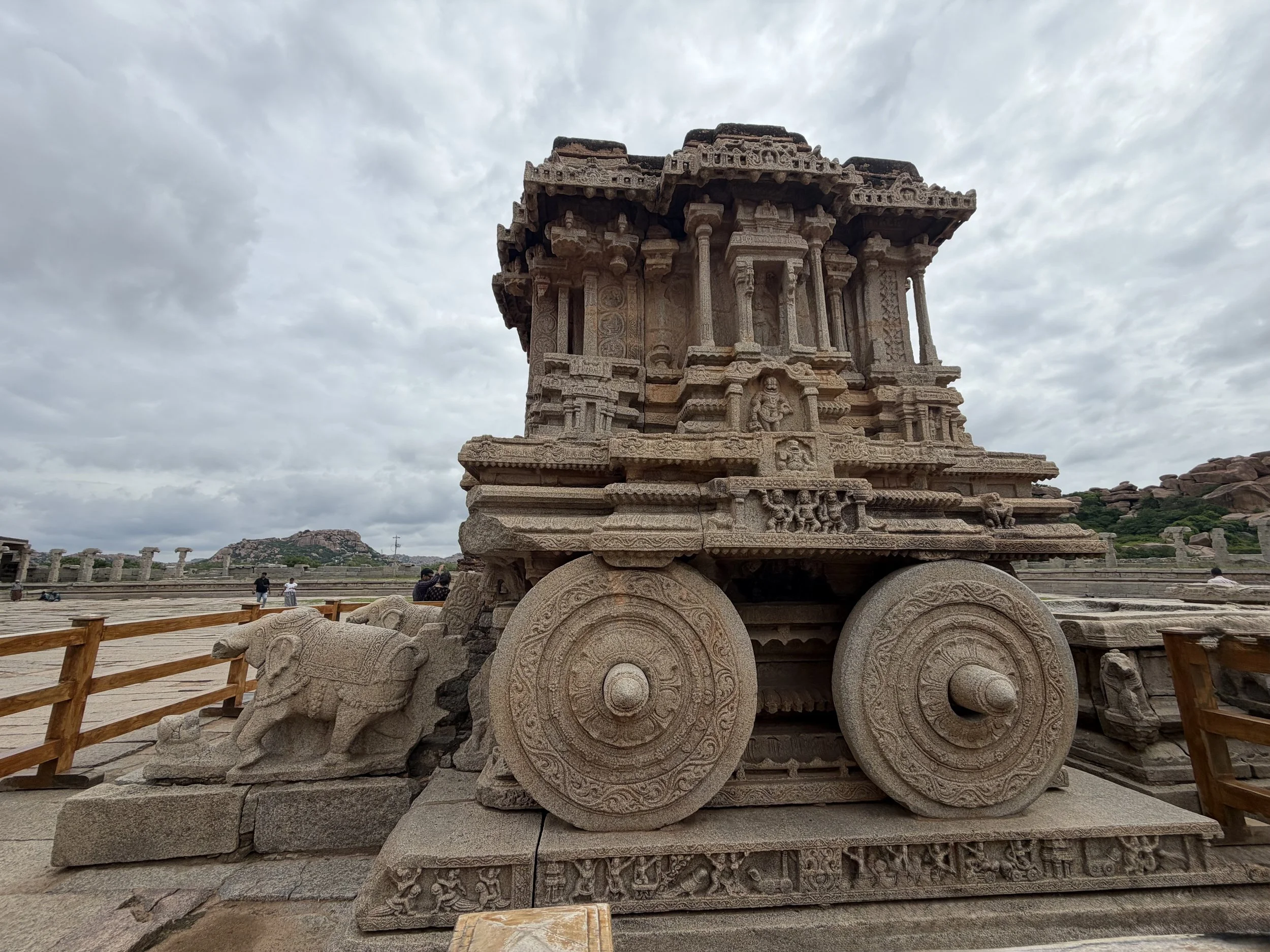
How does one describe the feeling of entering a temple that is hundreds of years old? It was a hot day; the sunlight that was pouring all around us was reflected by the sand-colored temple stones. I felt the intense warmth of the summer on the stone floor that I walked on. In front of the temple was the famous stone chariot, dedicated to the sun god. It is so ornate that it looks like a mini-temple on wheels. Its complex geometric design stuns any modern architect. Though there are some broken, destroyed parts, the chariot of the sun god still stands brilliantly, surrounded by brightness.
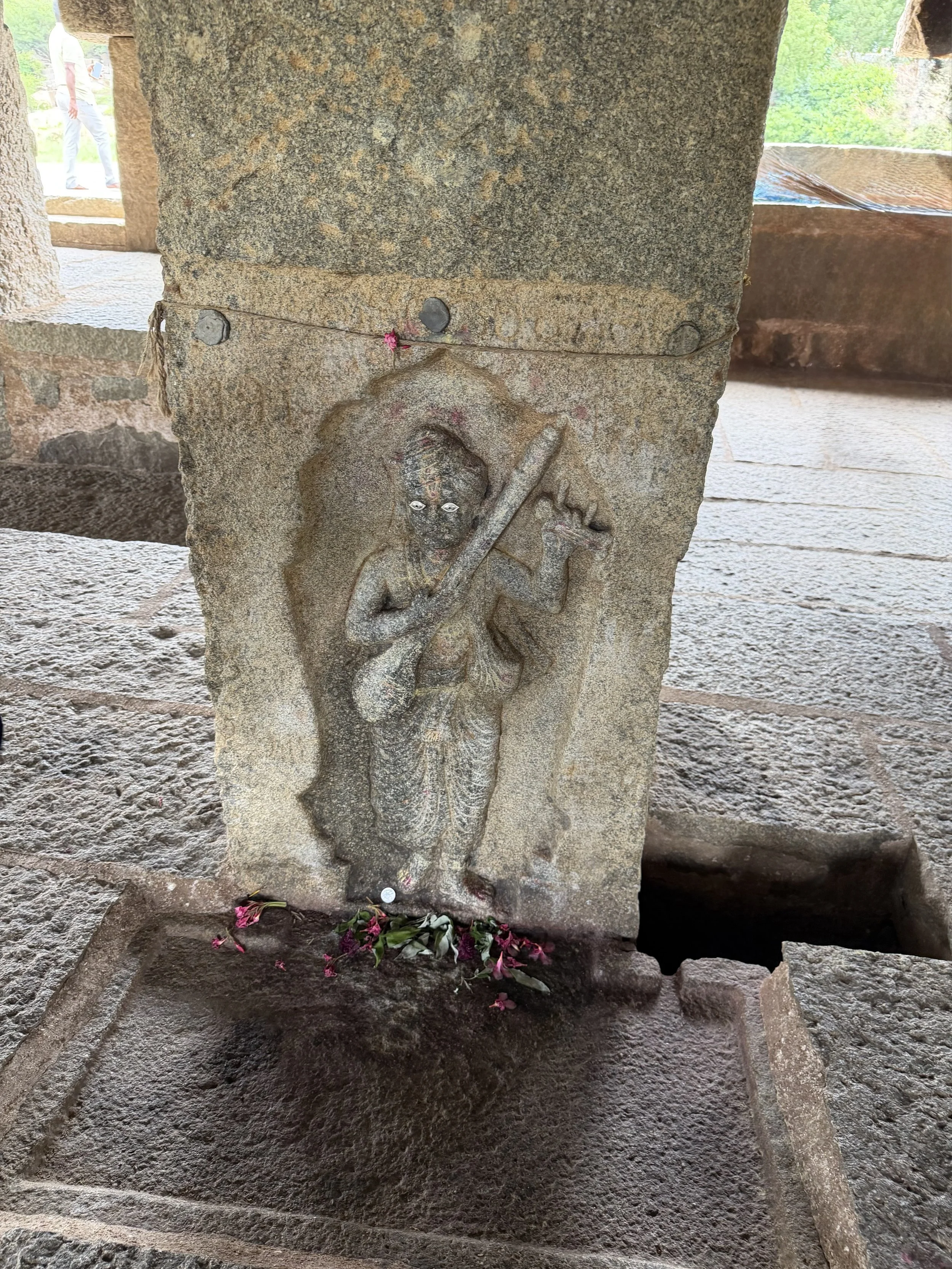
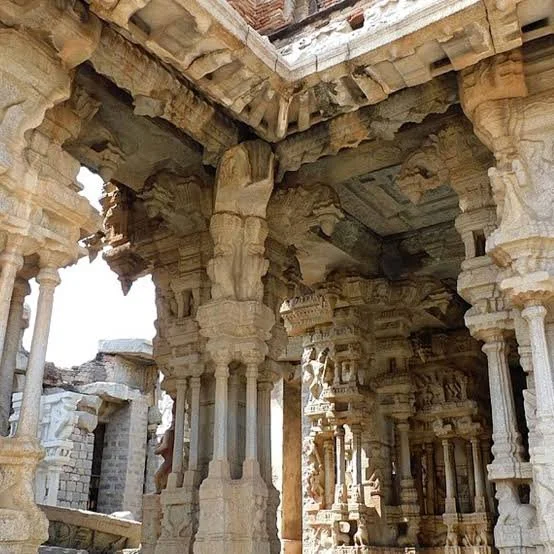
At the temple’s periphery is the hall of musical pillars. Each pillar, when tapped, rings with soft notes. When tapped in rhythmic succession, they sound like anklets on a dancer’s feet. I learned that grand performances would take place here. Perhaps a musician would sit right behind where I was standing, and play a melody for the best dancers of the kingdom. Even in the silence, the presence of those who once performed on this stage is felt in every corner. When the musical sounds echoed in the air, it felt like their souls were telling me to remember what has been forgotten.
The Tungabhadra river runs through Hampi with a peaceful and steady current that embodies the harmony and vitality of the region. At the banks of the river is a small stone structure where people can admire the rocky mountains on the other side of the river. It was in this place that Purandaradasa, who composed many well-known devotional songs during Vijayanagara's reign, sang to all those who would listen. I gazed outside to see the river flowing ahead of the mountains. I wished that my mind could freeze this image forever in my memory. A wind like the one I felt brushing against me must have once carried his songs to the surrounding mountains and greenery. I wondered: how many great things have these mountains been witness to? How many songs have they heard?
Having visited the ancient past of Hampi, I wish that its magic will always live, forever protected and cherished in the hearts of people.